
Early spring in the Cotswolds
Carpets of wildflowers, colourful fungi and curious shells that caught my eye in February

Hello, welcome to my monthly newsletter of nature highlights from recent outings.
The snowdrop walk
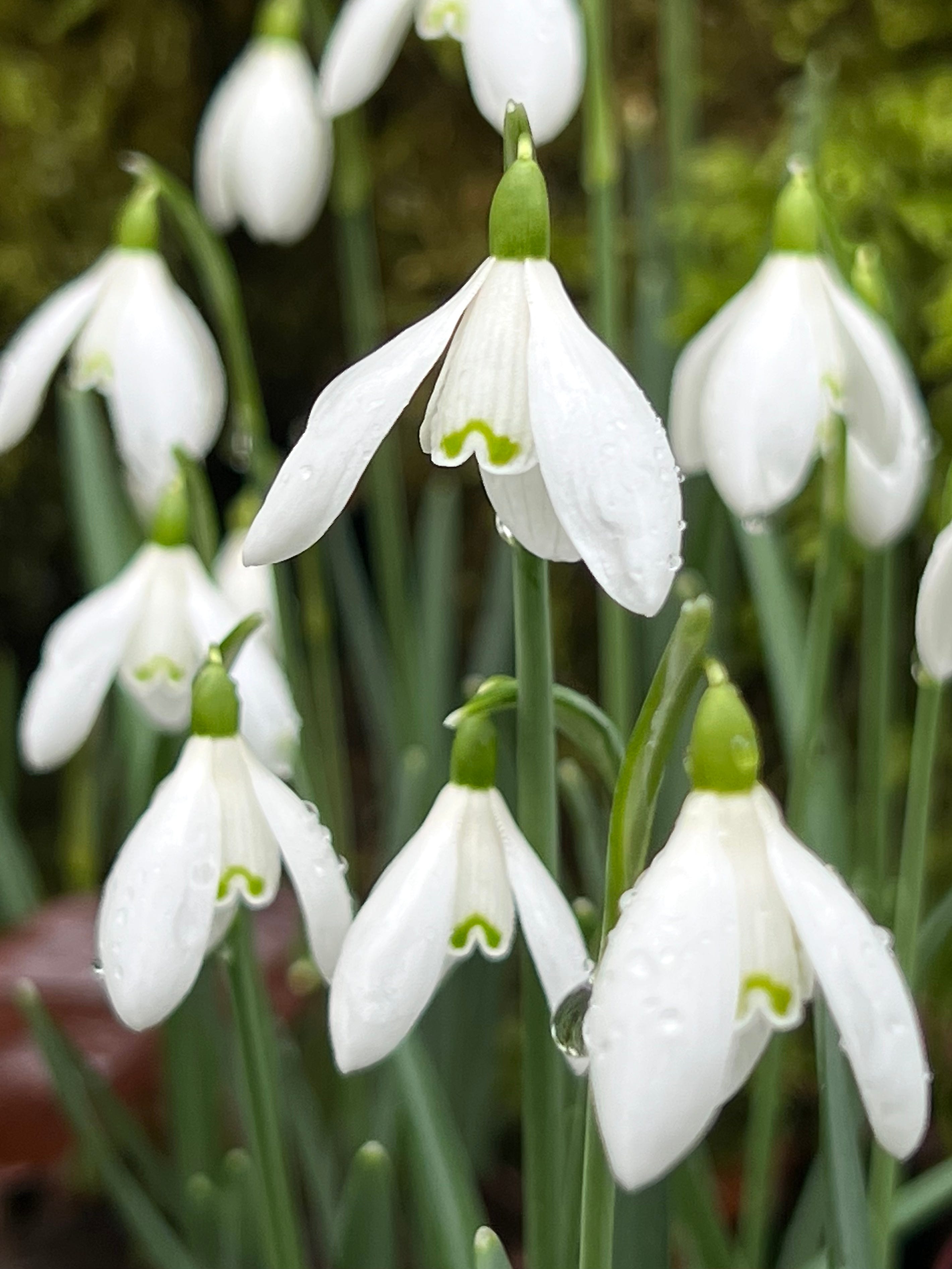
Rain or shine, on the first day of February I was determined to do ‘the snowdrop walk’. Recommended to me by a friend many years ago, it’s not far away, not famous and not particularly long or challenging. The M5 hums in the background. But across a couple of small fields and down a steep, muddy bank reeking of garlic from the profusion of ramson shoots, lies a forgotten place: a deserted old mill, a long-defunct well, a bubbling stream thickly curtained with hazel catkins. Beyond it, beside a small field sloping down from an old Cotswold-stone farmhouse, begins a patchwork of messy old woods on the edge of a once-grand private estate in Gloucestershire – the sort of woods that, at this time of year, are magical with snowdrops.
Towards the end of January, the flower buds burst, and now the milder air temperatures, occasionally topping 10˚C, trigger them to open their outer petals wide, unveiling the green-tipped segments within, ready to welcome the first pollinators.
Forest of shoots
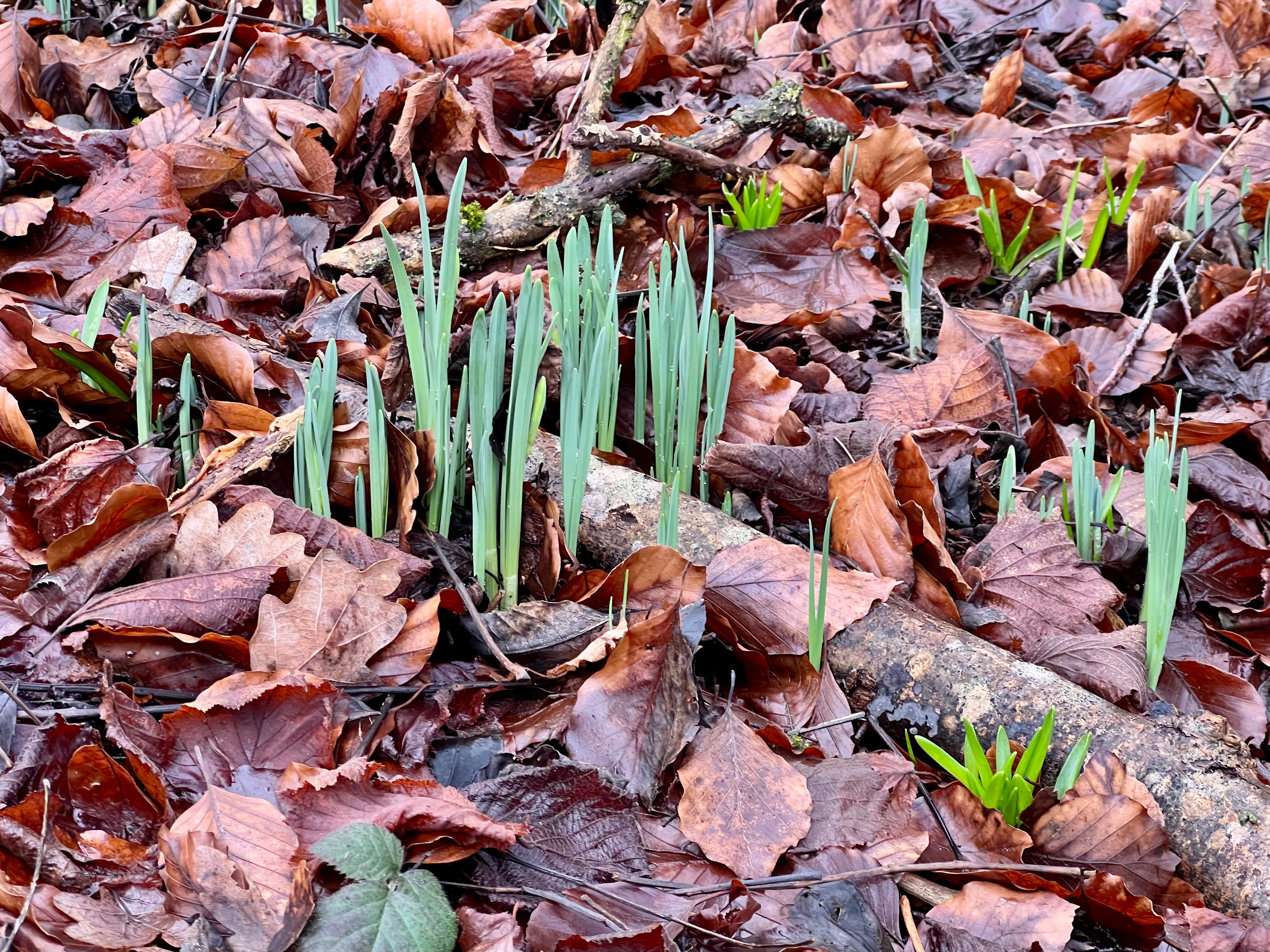
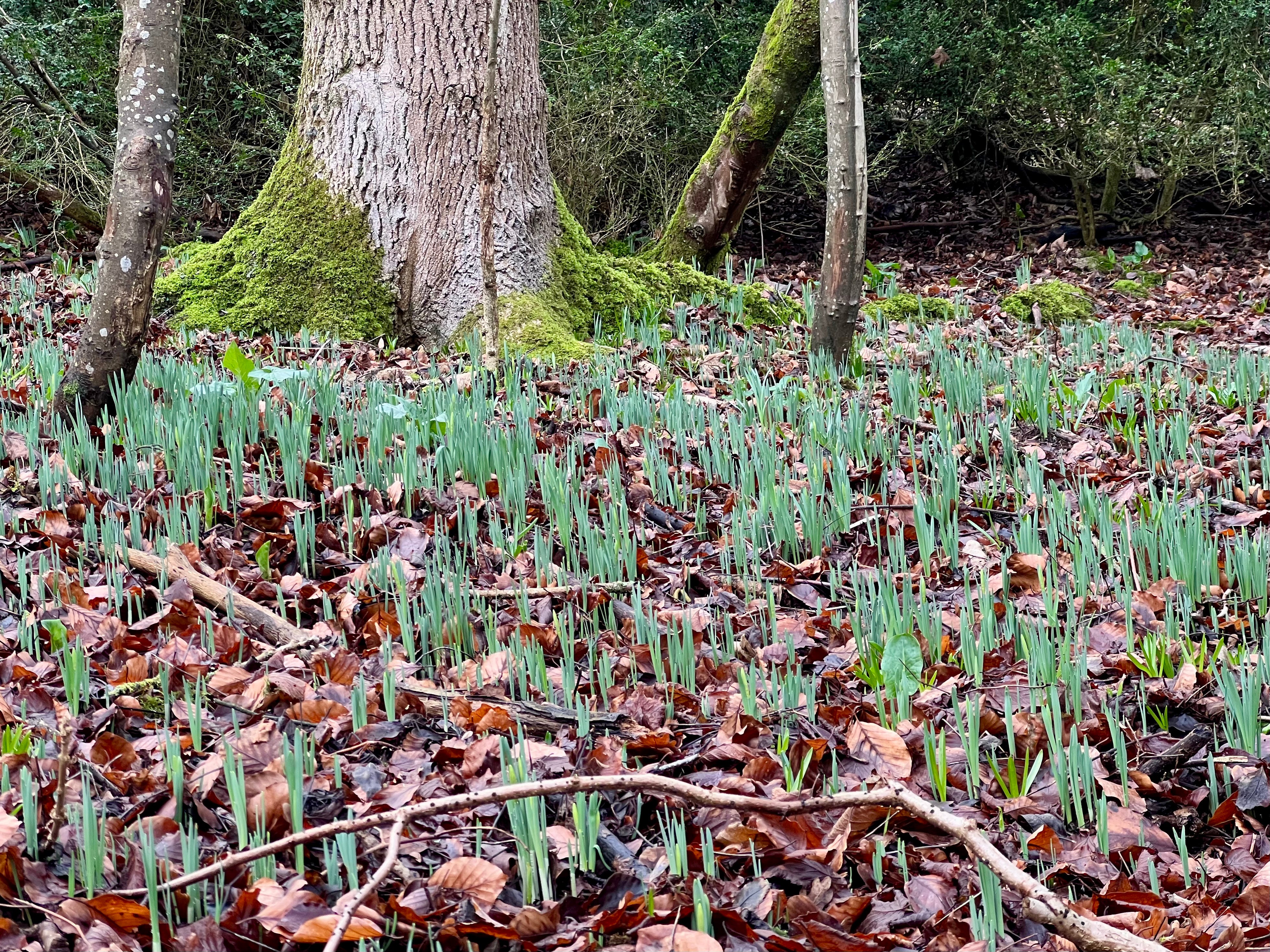
I’ve always referred to this now-familiar route as the snowdrop walk, but the carpets of nodding, white heads were not the only treasures to be found along the way. The next show in nature’s calendar was already lined up: a forest of greyish-green shoots had stabbed through the autumnal brown of fallen beech and oak leaves. In a few weeks’ time, the wild daffodils would be out, their yolky yellow trumpets fringed with twisted, paler petals.
These diminutive native daffodils were once widespread in England and Wales but are now found only in scattered colonies, some well known ones in Gloucestershire’s ‘golden triangle’, between Newent, Dymock and Kempley.
Among the daffodils, I spotted a few bluebell shoots preparing to follow the floral parade – usually in April – just before the beech canopy overhead unfurls.
Goodbye old oak
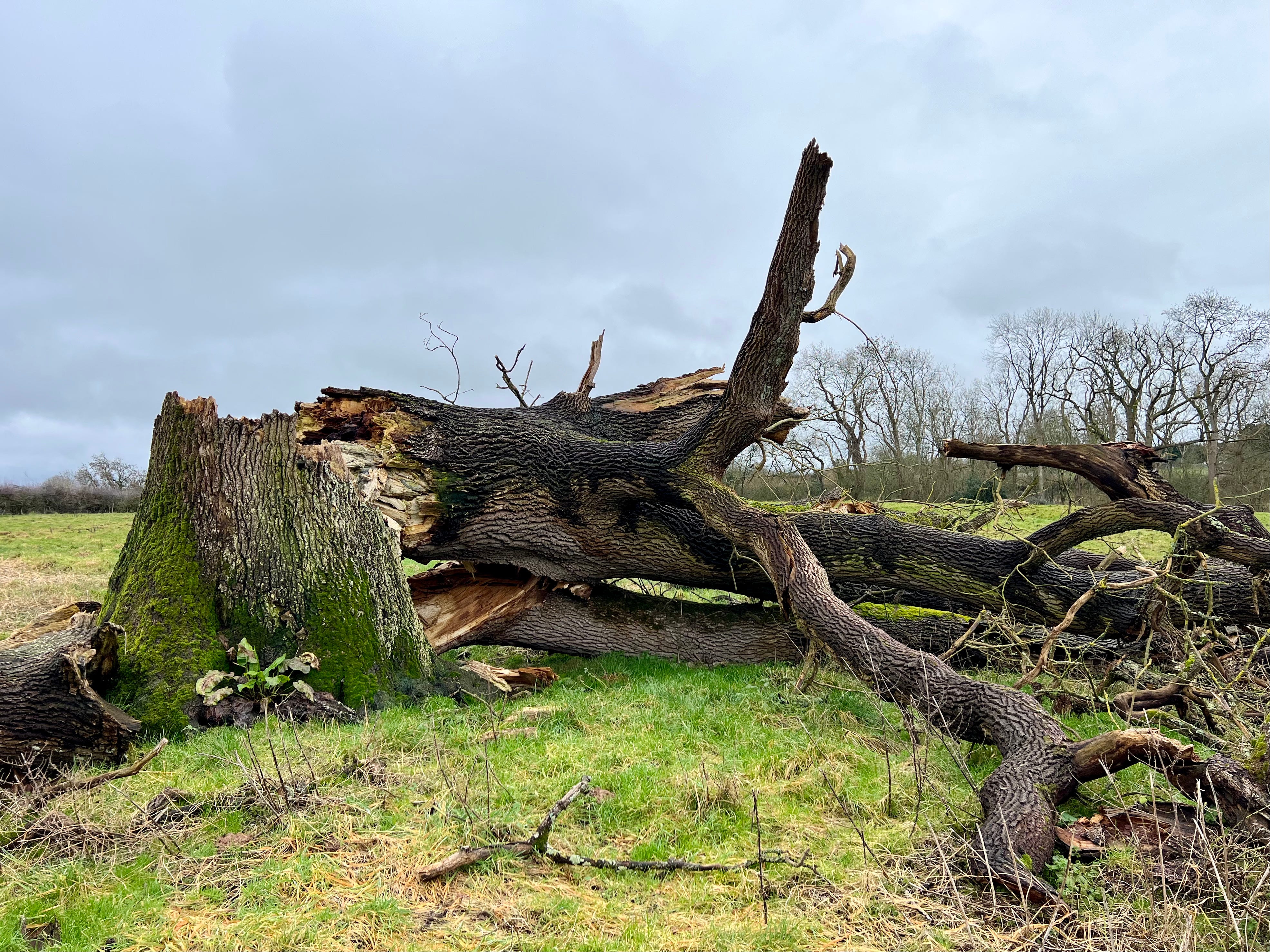
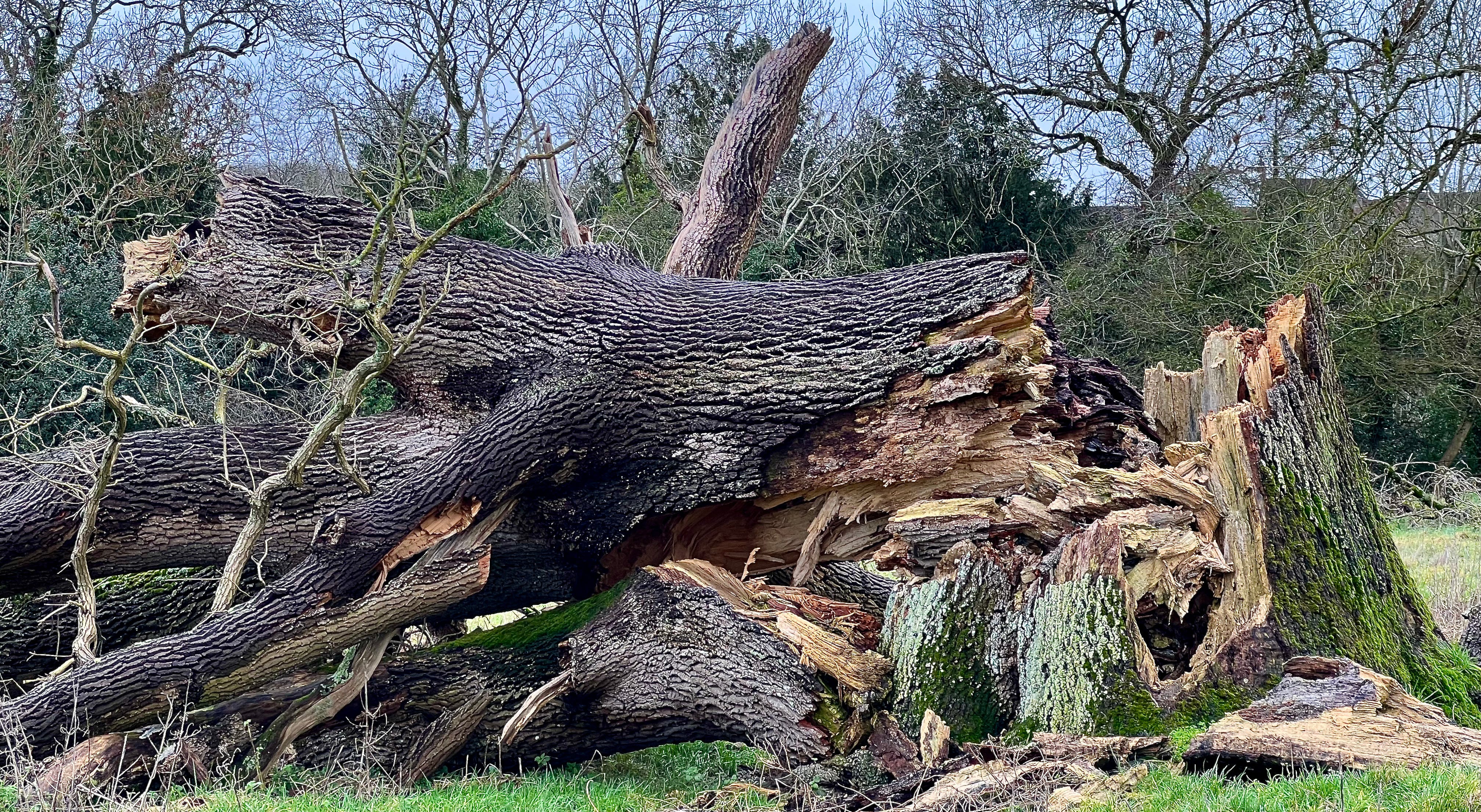
Joyful as it was to see the abundance of snowdrops and the promise of wild daffodils, I was quite taken aback to discover the sudden loss of a tree that had long been part of the landscape.
I was looking forward to seeing this old oak, stood in the middle of a field near the start of the walk. Its mighty stature and wide spreading branches signalled both its maturity and the likelihood that it had never been crowded by neighbours. It always caught my eye when I came this way, though I don’t – and won’t now – have any great pictures of it. There it was, crashed down, like a beached whale across the grass.
It was already quite weathered; I think it must have lain there since a vicious storm soon after my visit last spring. Its fallen limbs still bore the moss and lichens they supported in life, joined now by a variety newcomers (I noticed witches butter fungus tucked away on one of the smaller branches).
I couldn’t estimate the tree’s age, but part of its trunk was significantly hollowed, a common characteristic of veteran and ancient oaks, which can be many hundreds of years old. Whether or not it deserved any official categorisation, it was a significant tree to me. I always appreciated it but realise that I rather took it for granted.
Stars of spring
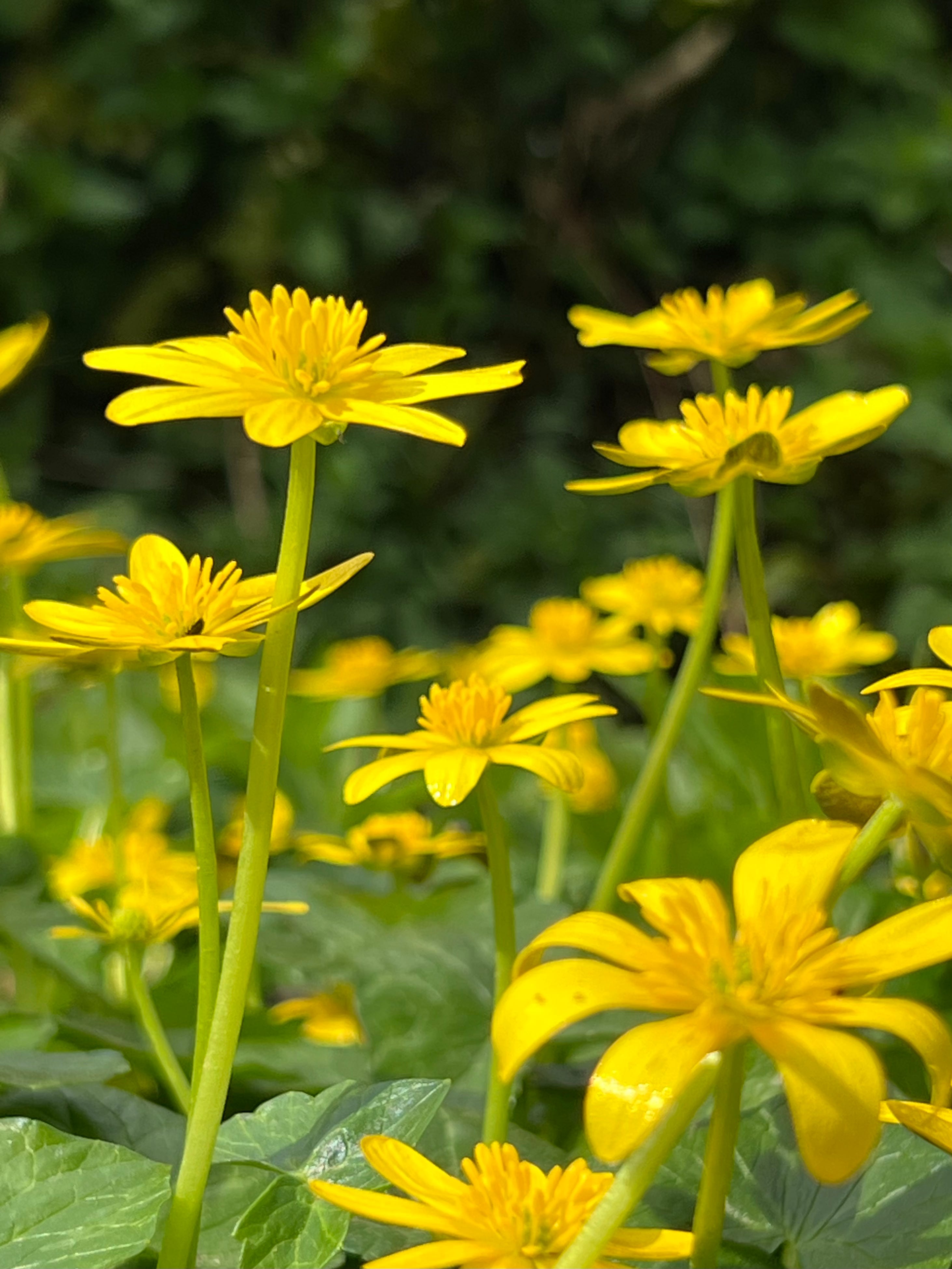
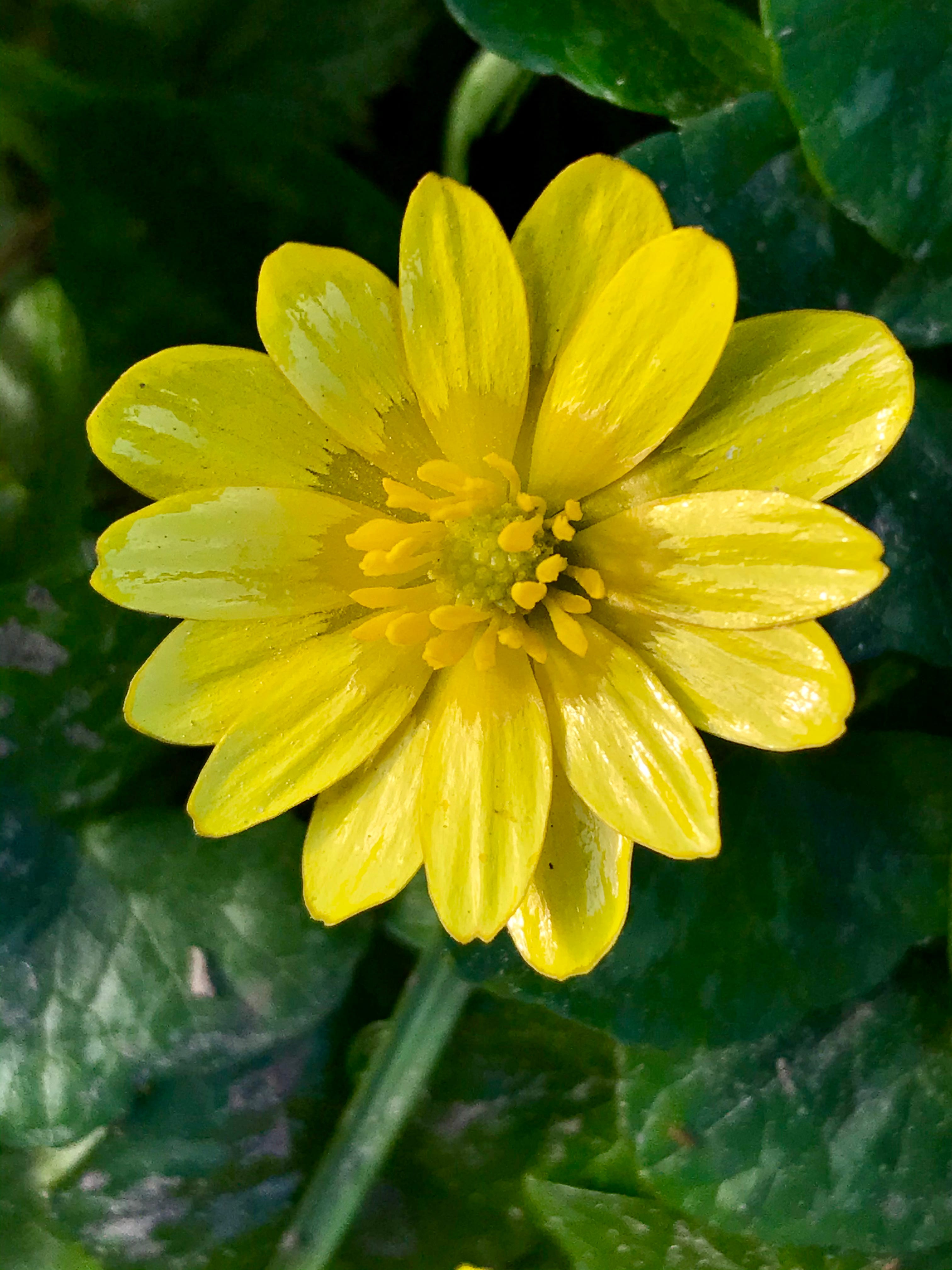
While the muted colours of winter dominated the January landscape (aside from the spectacular appearance of the northern lights one night over Gloucestershire), February ushered in a welcome return of colour, most noticeably in the shape of lesser celandines. When the sun (occasionally) came out, these buttercup relatives responded by opening their petals wide, brightening swathes of banks and verges with their shiny yellow, star-shaped flowers.
I tried to better the images I had made in previous years, capturing celandines with my phone. It was close-up photography that had first drawn my attention to the variation in number of petals between individual flowers: my ID books suggest a norm of 8 to 12, but my kids (always on the look out for more) found several record breakers with 15.
Elf cups
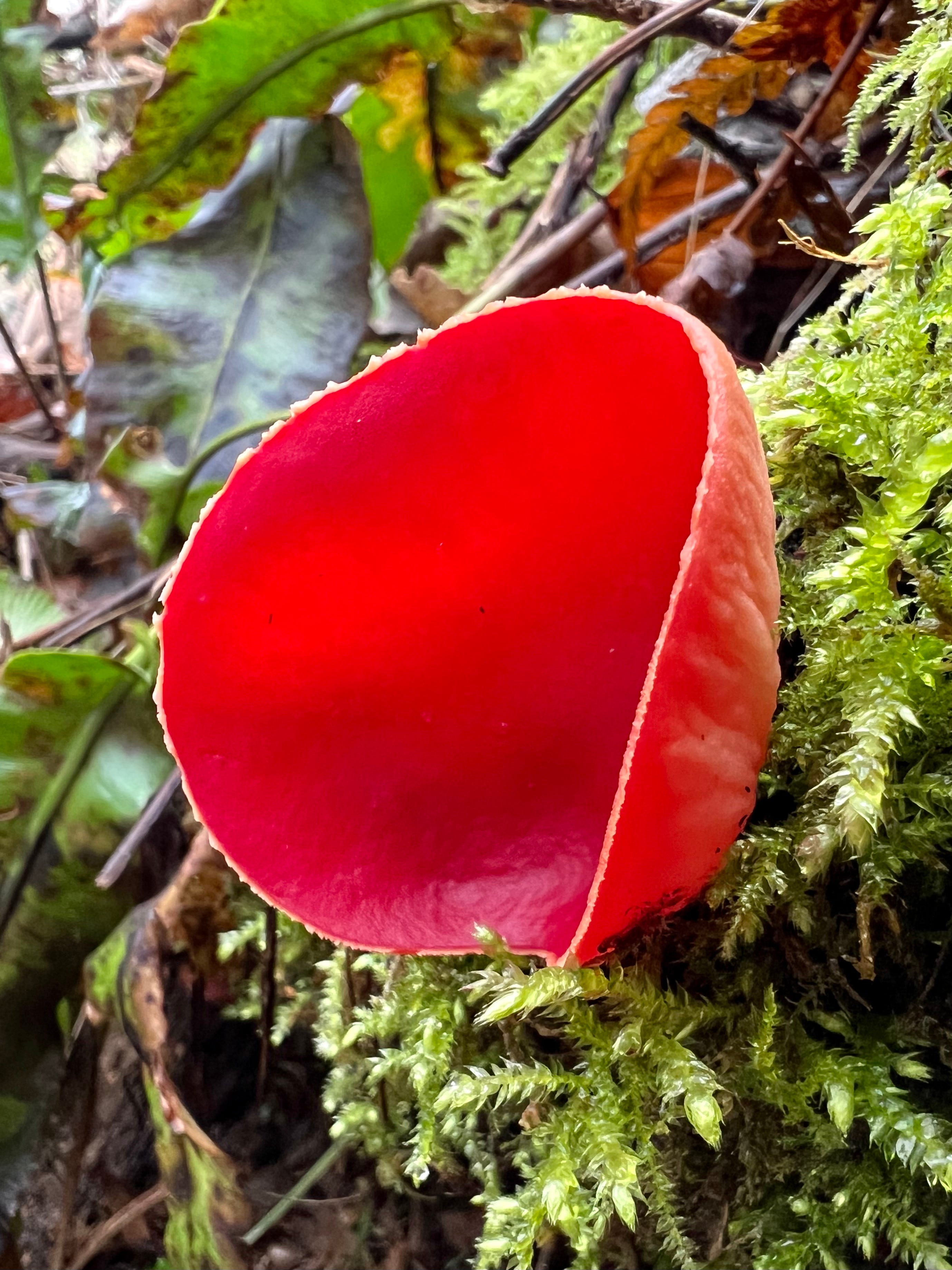
An upside of all the rain was the chance to see some damp-loving fungi thriving in the woods, adding their vibrant dashes of colour to the early spring landscape. Bright red elf cups are widespread in Britain, but scarce, and so always exciting to spot.
I tend to refer to them all as scarlet elf cups, but I’m aware that there are two superficially identical species: scarlet elf cups Sarcoscypha austriaca and ruby elf cups S. coccinea, discernible only under a microscope. Their fruiting bodies (appearing from early winter to early spring) are charming, elf-sized cups, with smooth, bright red inner surfaces, paler, downy outer surfaces and very short stems.
A handful caught my eye on the woodland floor, nestled in a bed of soft moss. About four centimetres across, they were larger than most I’d seen before – and pristine, not a rodent- or slug-nibble in sight.
Woodland witchery
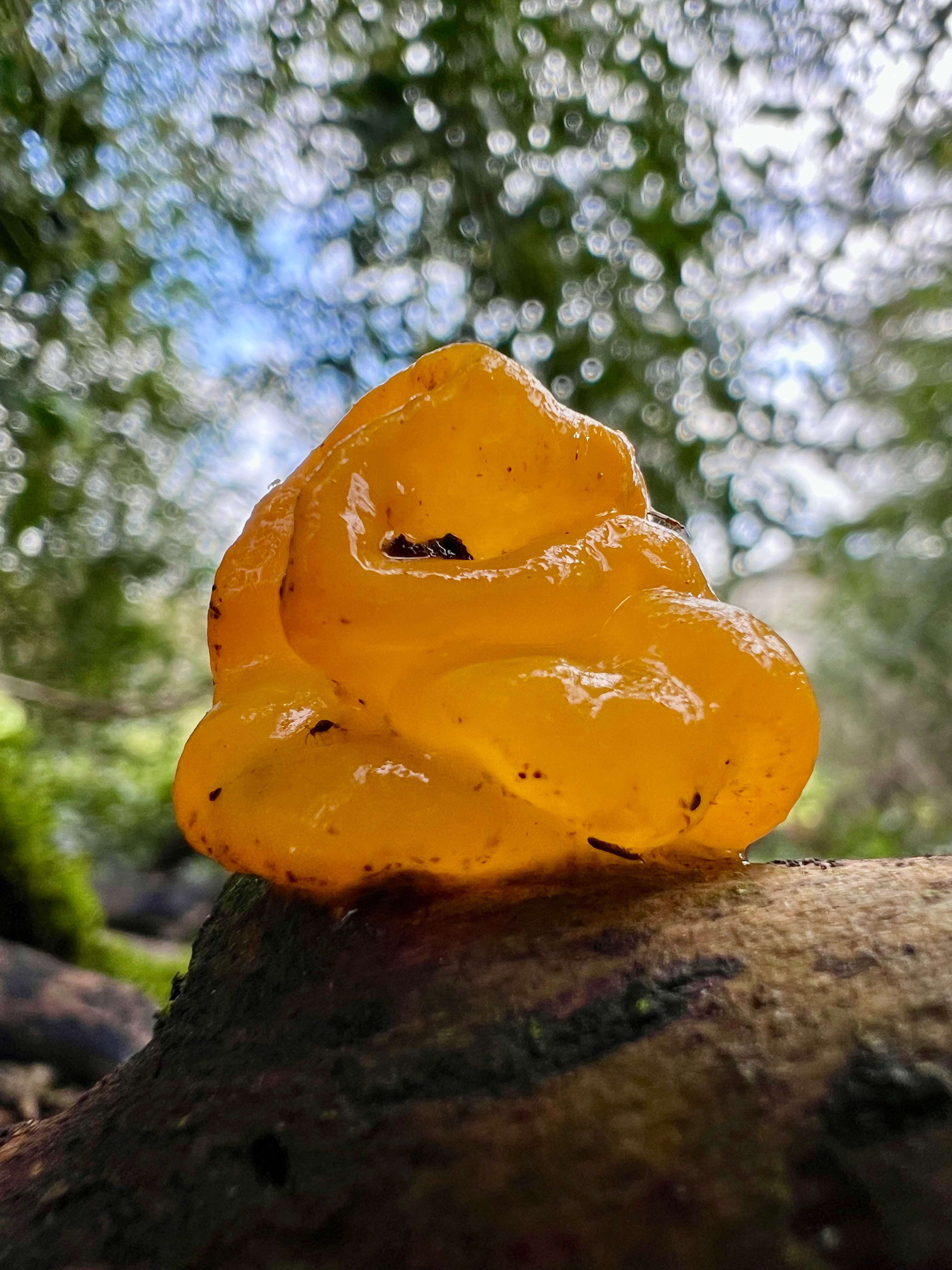
If a rather revolting-looking, yellow-orange gelatinous mass appears on your gate or door, beware: legend has it that this means a witch has cast a spell on you. I hope this doesn’t apply to chance encounters in the woods with this parasitic jelly fungus, as I’ve had several this month.
Known as witches’ butter, or yellow brain fungus, for its colour and irregular shape, it fruits all year round but especially in damp conditions. Like the red elf cups, there are two species commonly found in Britain that are quite tricky to separate: Tremella mesenterica and T. aurantia. Both parasitise wood-rotting crust fungi, but each favours a different type. Sometimes the crust fungus is visible and identifiable – confirming the identity of the jelly fungus – but sometimes it is pretty much enveloped by the parasite.
Purple jellies
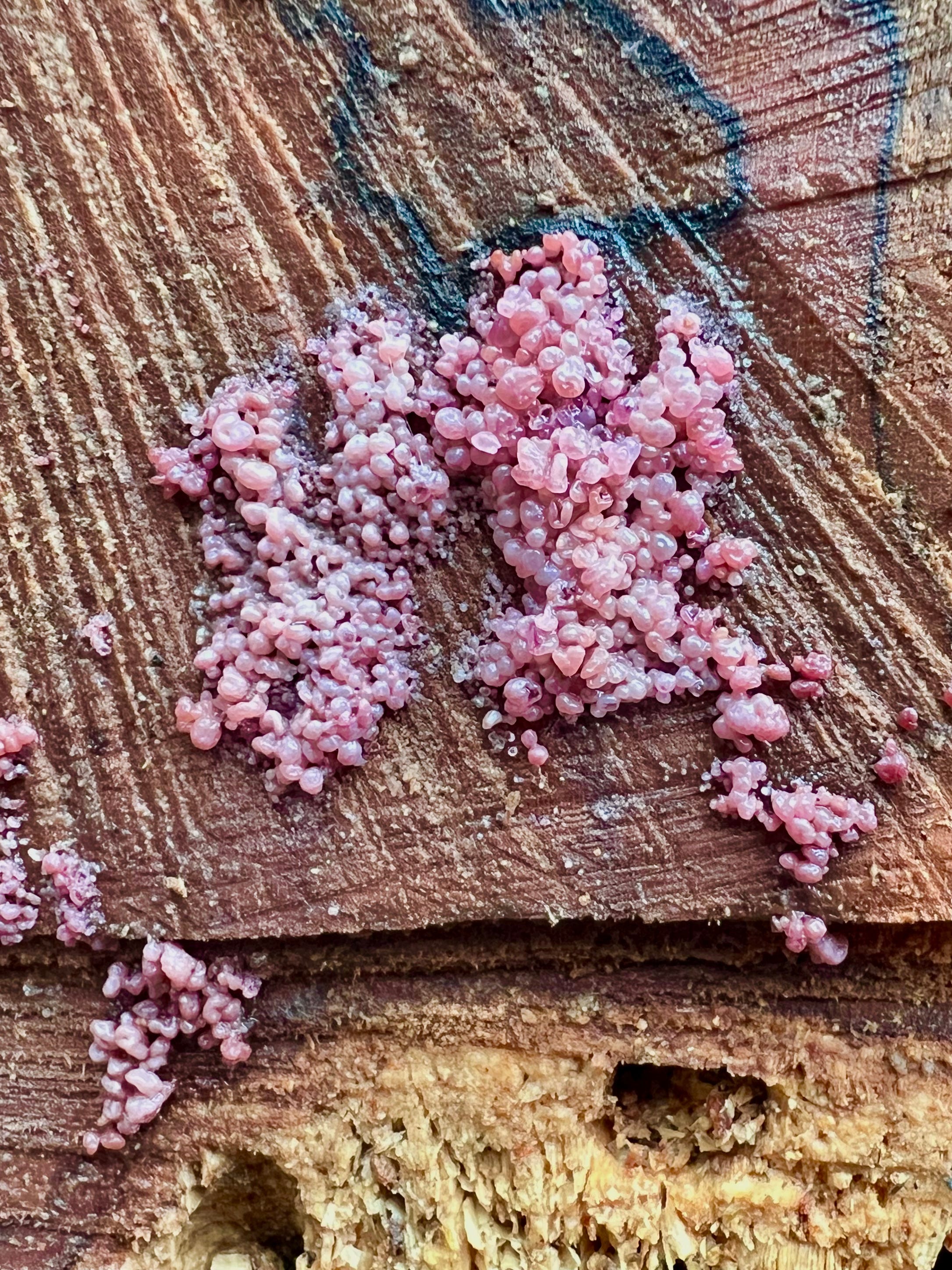
When checking the ID of this smattering of pinkish-purple blobs on a felled beech tree, I was slightly puzzled, until I realised that the purple jellydisc fungus Ascocoryne sarcoides occurs in two distinct forms. I think the small, misshapen spheres I spotted here are the asexual form, each blob spanning just a few millimetres, while the sexual form produces larger, gelatinous discs of a similar colour but up to 1.5 centimetres across.
Snail cemetery
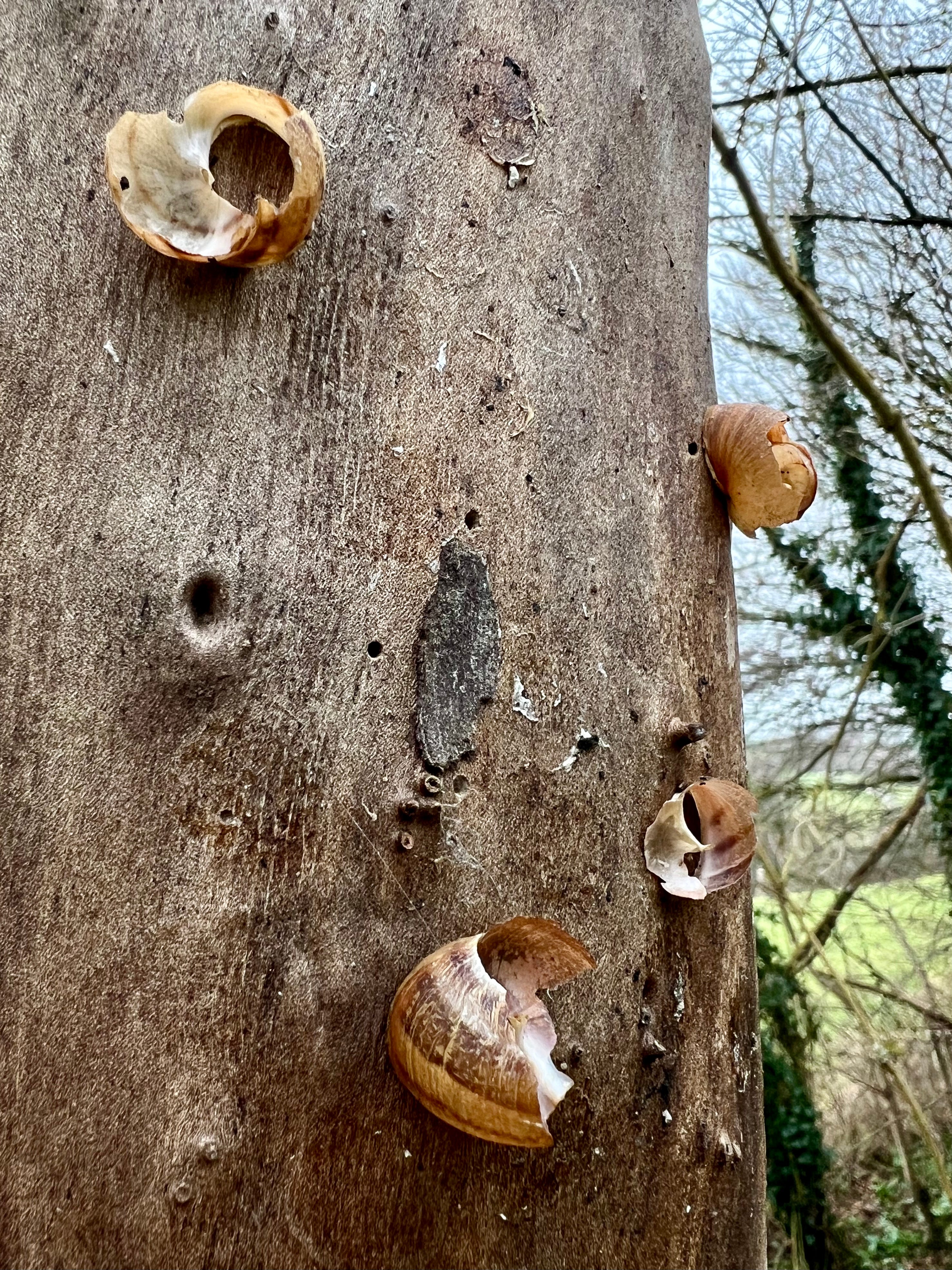
This collection of broken snail shells at eye level on the trunk of a dead ash tree caught my eye as I was walking along the Cotswold Way.
The internet offers many theories as to why snails climb trees and why they might then have died, the most plausible perhaps being that they climbed to escape predators or the higher temperatures at ground level (we had several heatwaves in Gloucestershire last year) and then dried out, their shells remaining firmly attached to the tree trunks by virtue of their dessicated mucous. I’m not sure why these shells were all broken – possibly, predation by birds.
These pictures from Spain’s Doñana National Park of snails clustering in summer on the top of plants and fence posts are worth a look.
Happily, the endless rain has, at last, stopped, and spring has definitely sprung in my corner of Gloucestershire.
I hope you enjoy noticing nature this month and creating some images with whatever camera you have (all the pictures in this post were made by me with an iPhone 13 Pro).
Thank you very much for reading.
Jane
So many fascinating things to see, and the oak reminds me of an old shipwreck.
These are great sights! (So sorry about your oak…)