
The patterns of winter
From tiny spores to dancing skies: things that caught my eye in January

Hello, welcome to my monthly newsletter of nature highlights from recent outings.
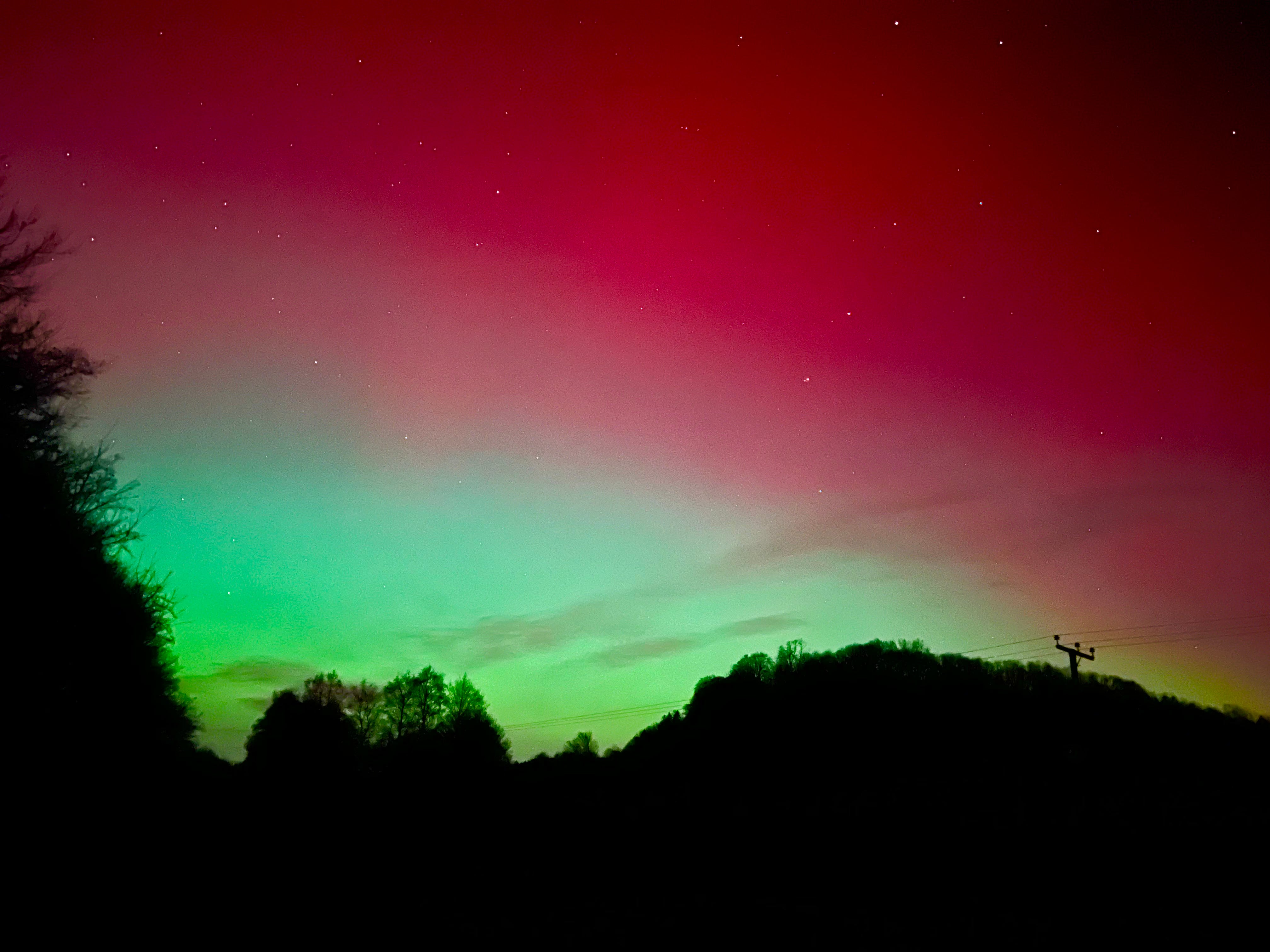
The not-so-northern lights
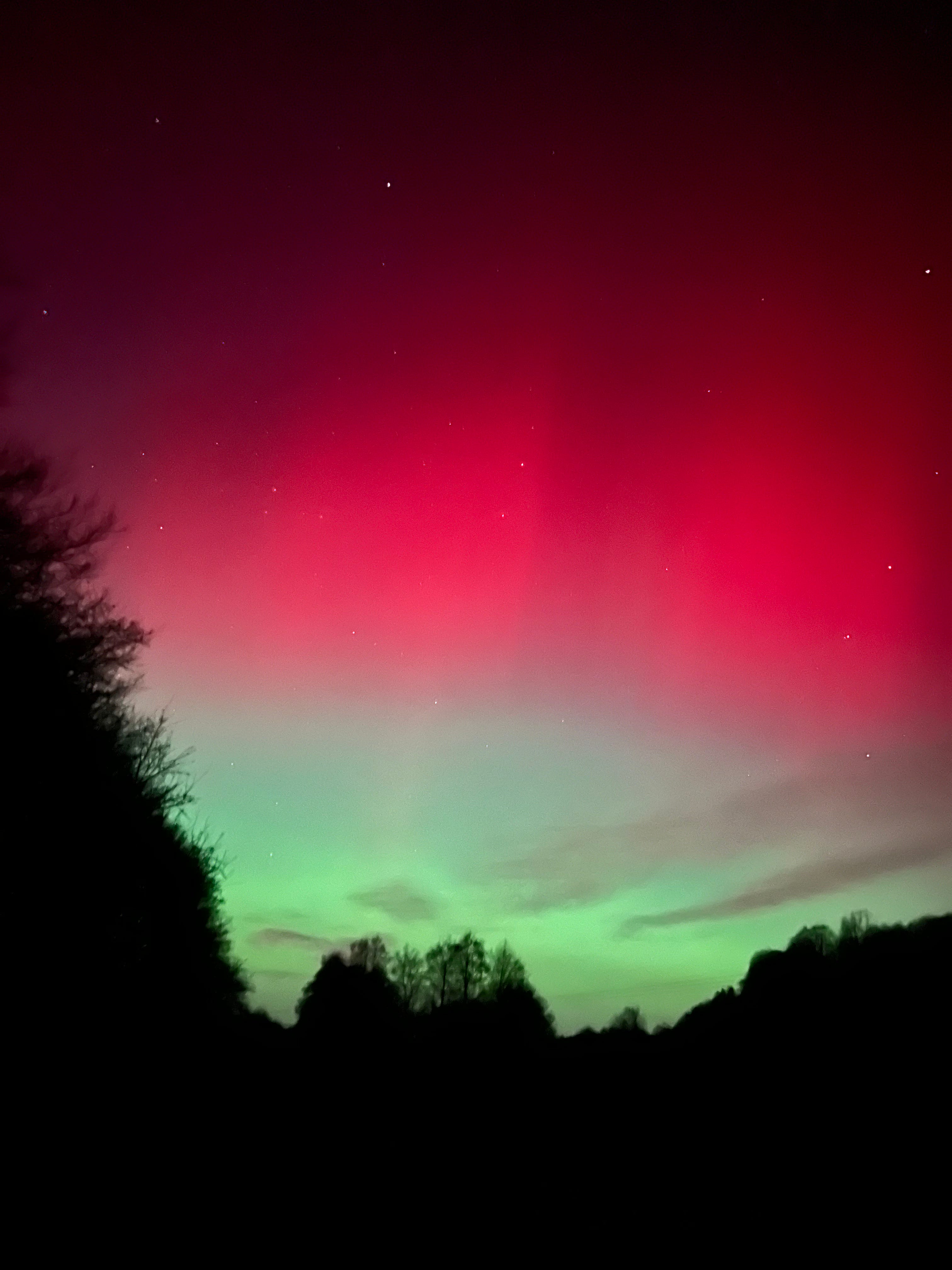
Just before 10pm on Monday, 19 January, I was scrambling over a stile into a field. The AuroraWatch UK app had pinged. Charged particles, which had been blasted from the sun in a large solar eruption less than 24 hours previously, had hurtled more than 90 million miles across space and were now colliding with atoms in the Earth’s atmosphere. Blessed with the relatively dark skies of rural Gloucestershire and a break in the clouds, the resulting aurora dancing across the skies was visible even to the naked eye and looked spectacular through a camera.
Tips for viewing the aurora borealis (northern lights) usually involve heading for the Arctic Circle – the charged particles are drawn towards the magnetic north pole. But this storm was so intense that it was widely visible across the UK (cloud cover permitting), even as far south as the Isles of Scilly.
From my Gloucestershire vantage point, the show was not confined to the northern sky. Bands of vivid green (emitted when charged particles strike oxygen atoms) streaked across the sky to the east and southwest, while magenta (from collisions with nitrogen) glowed above green to the north.
Bare trees
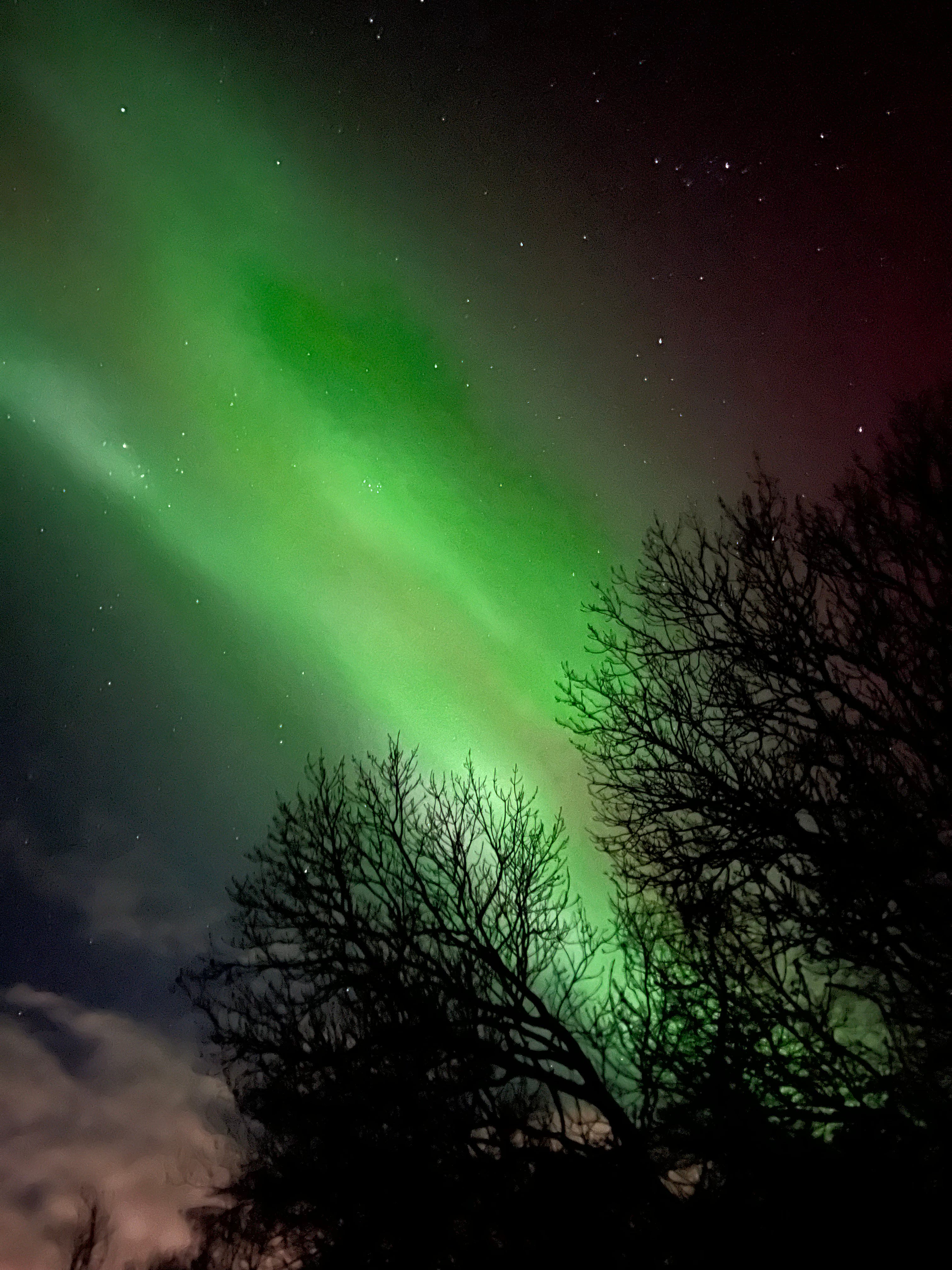
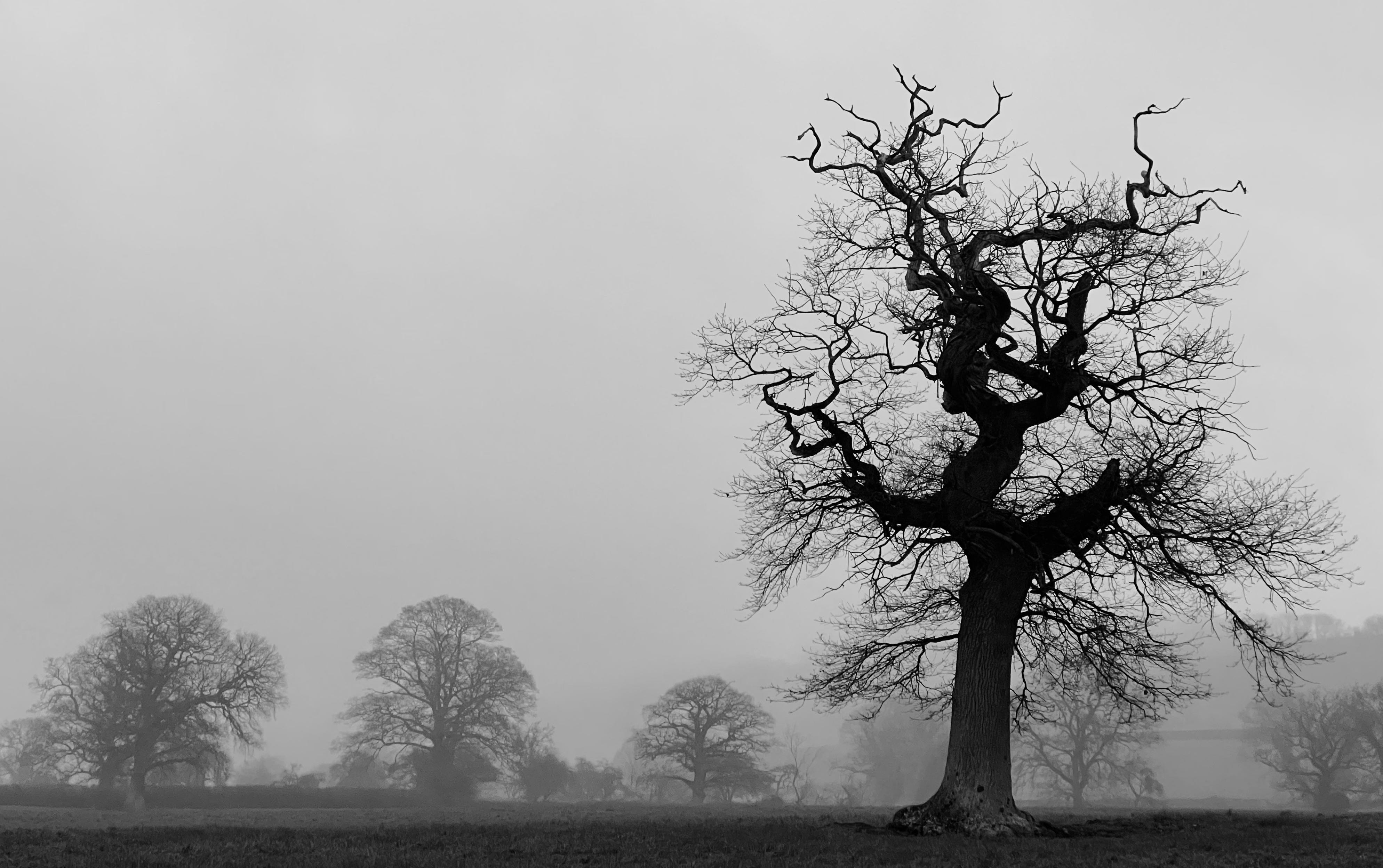
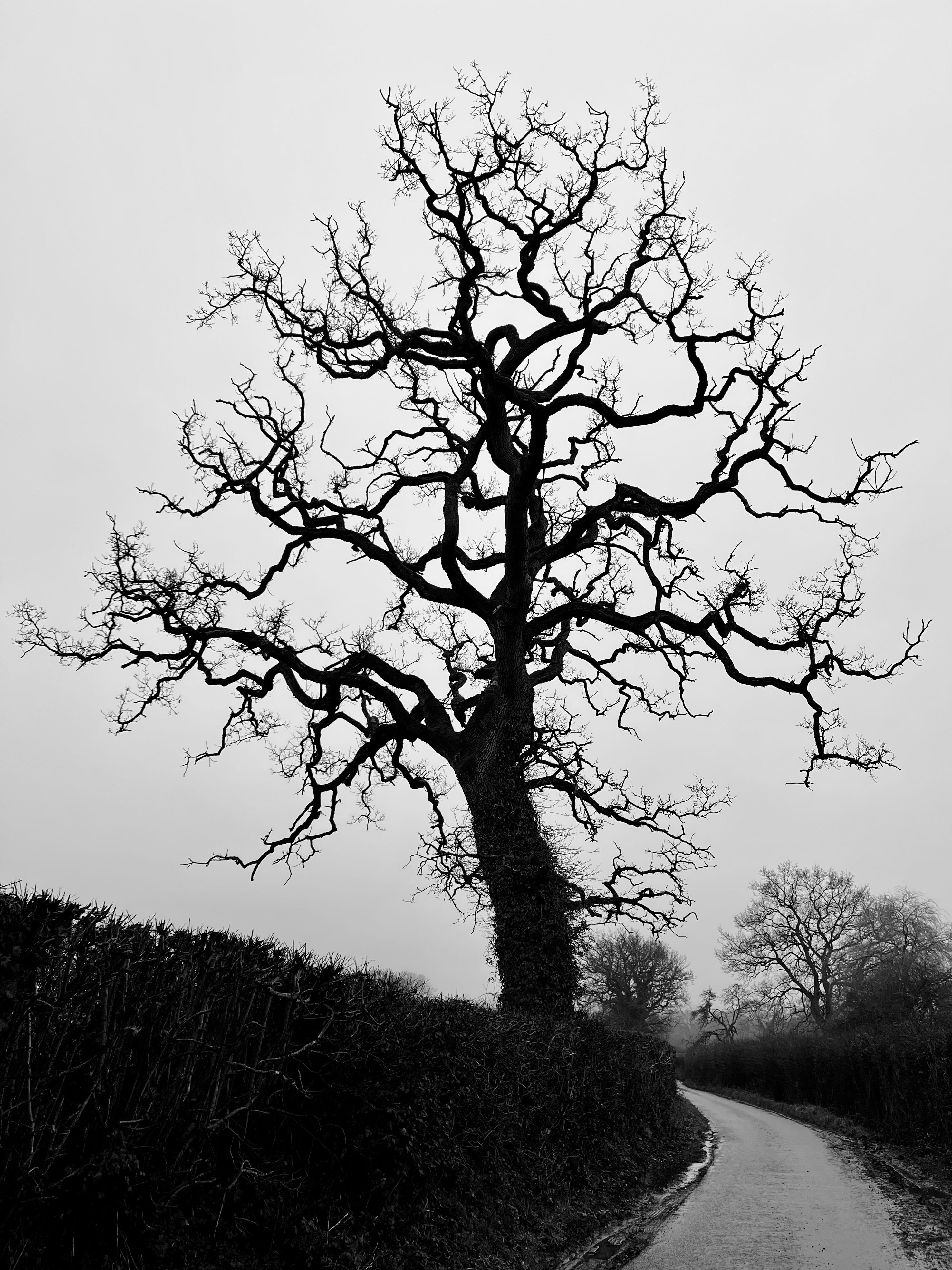
Though January otherwise brought endless rain and grey skies to Gloucestershire, it also brought the opportunity to admire trees in the landscape. When the bare bones of deciduous species are exposed, each tree’s unique character – moulded by its surroundings and life experience – is all the more obvious. Capturing portraits of old trees with my phone quickly became my main creative project for the month and drew me outside to walk whatever the weather.

After a while, I began to get my eye in. I found I could identify many species from a distance by their overall shape and the pattern of their twigs and branches – forked-lightning oak, fountain birch, upturned ash, zig-zagging lime and so on. Their bark and buds, if I could get close enough to see them, provided useful confirmation. The two ID guides I found most helpful were: Winter Trees: A photographic guide to common trees and shrubs, by Dominic Price and Leif Bersweden (FSC Publications) and this online UK tree guide.
Lichens on ash
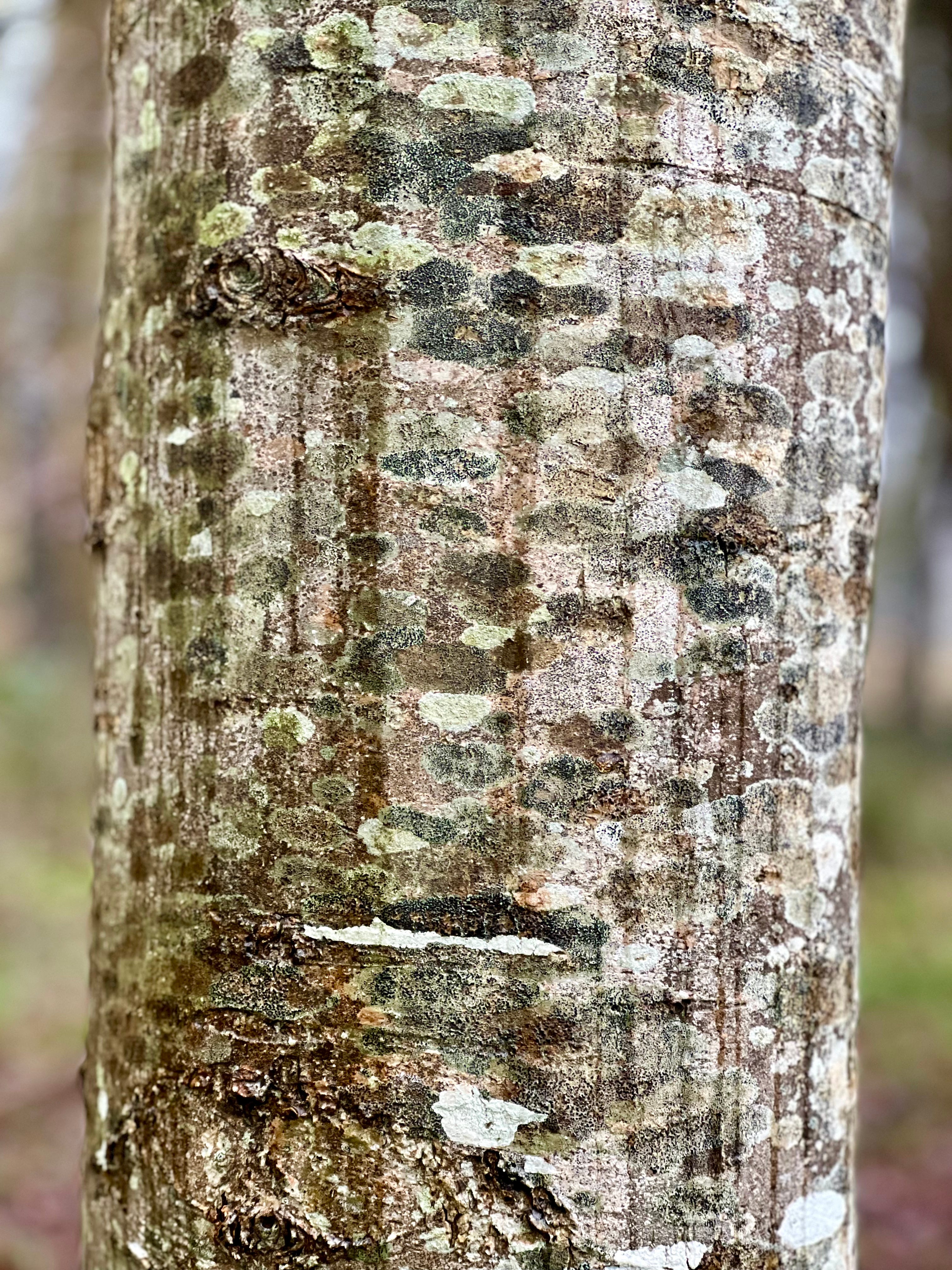
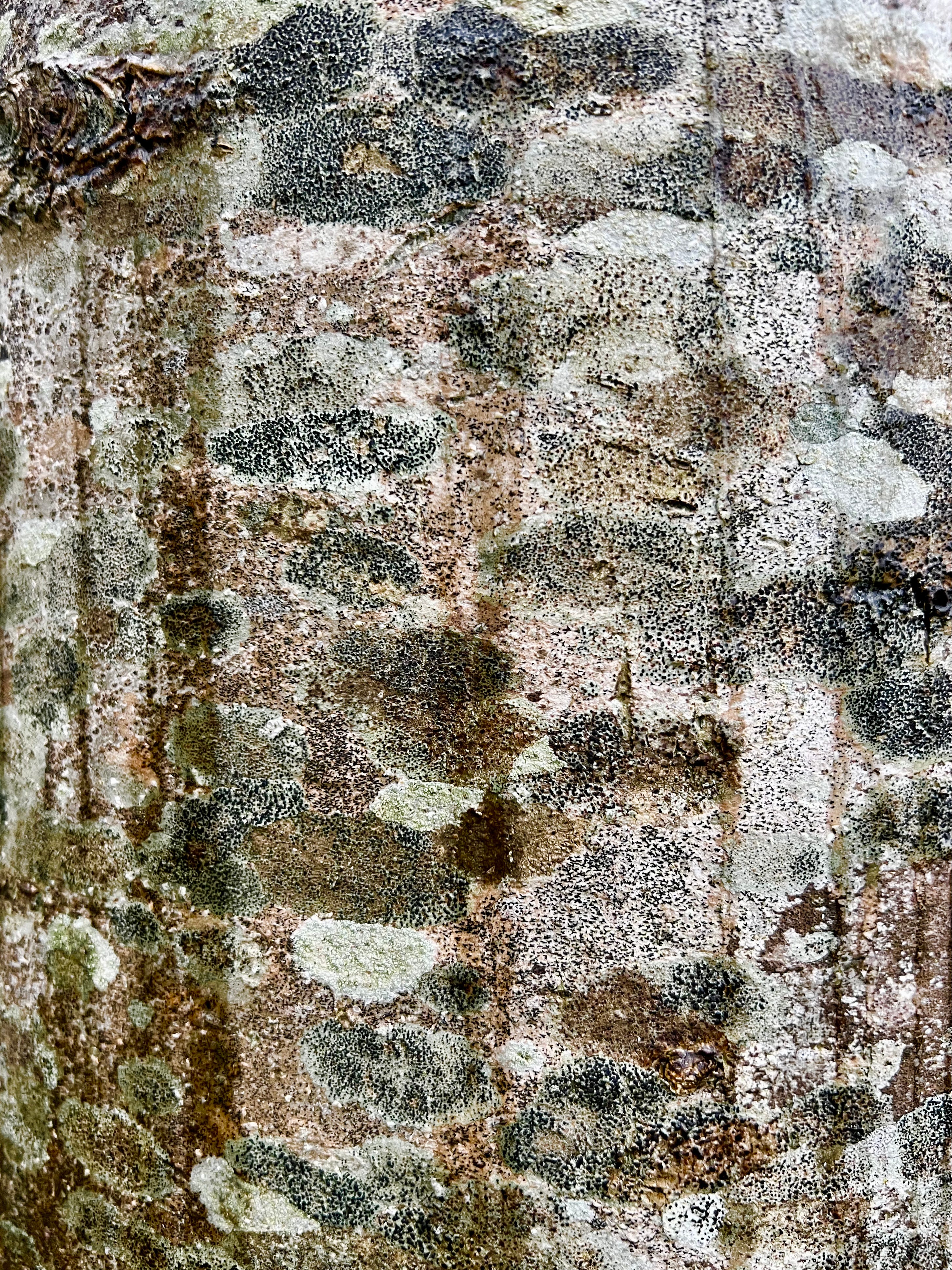
One of my regular walks took me past a stand of young ash trees. These are particularly eye catching in the winter gloom, when there is little undergrowth vying for attention and plenty of rain to enhance their abundant lichen badges. It’s intriguing to think that each lichen is not a single organism but a network of fungal hyphae sheltering photosynthetic algae/cyanobacteria, which in return provide the fungus with food.
A couple of days later, I was reading Phil Gates recent post describing lichens in the fog and realised that I should have been looking more closely. The black dots on the lichen, he explained, are the spore-producing bodies (known as apothecia) of the fungal partner in the lichen symbiotic partnership. I also learned that ash seems to have a very rich lichen flora – more than 250 species of lichen are associated with it (and expert ID skills are needed to pin them down).
Starlings at sundown
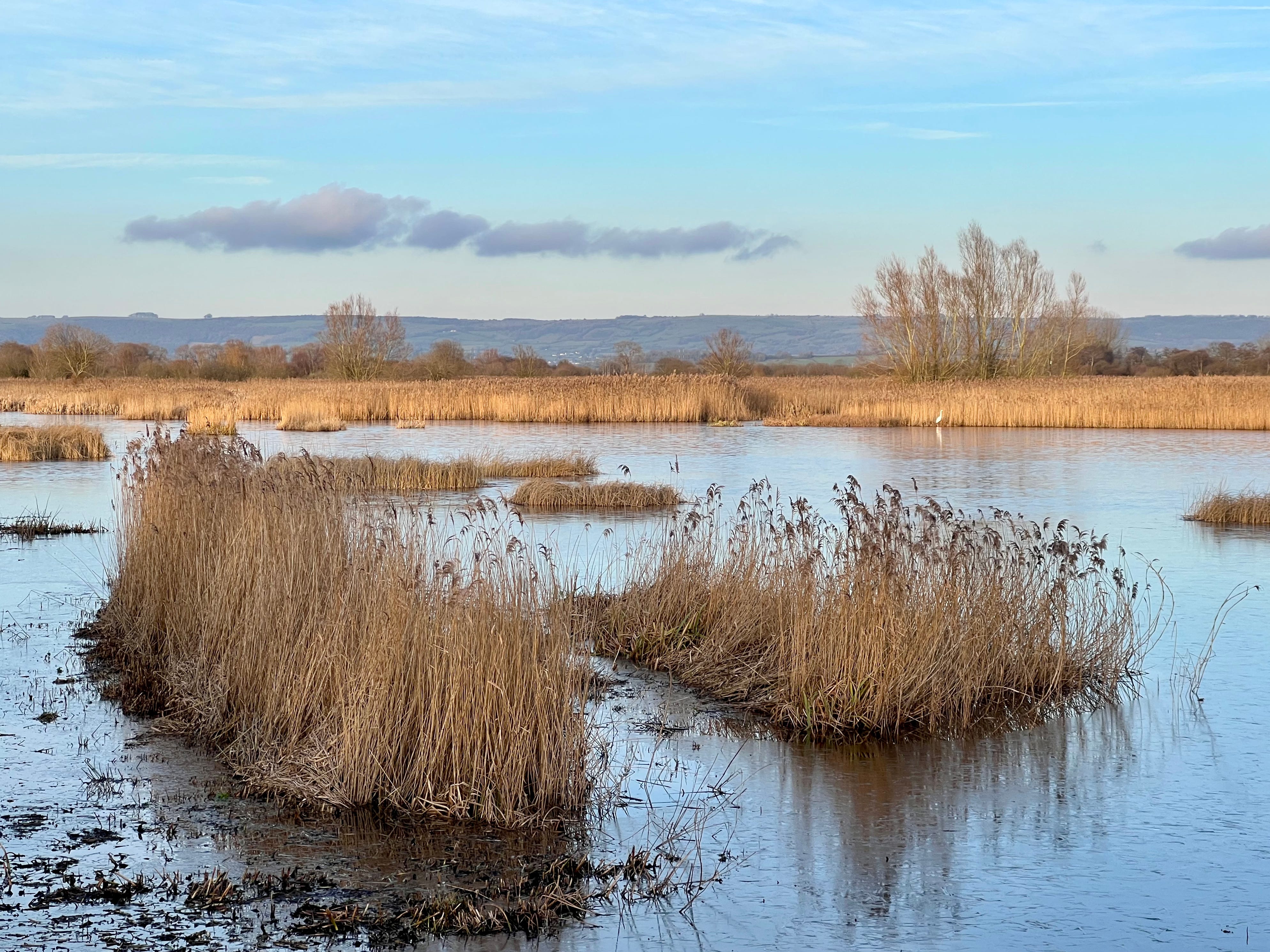
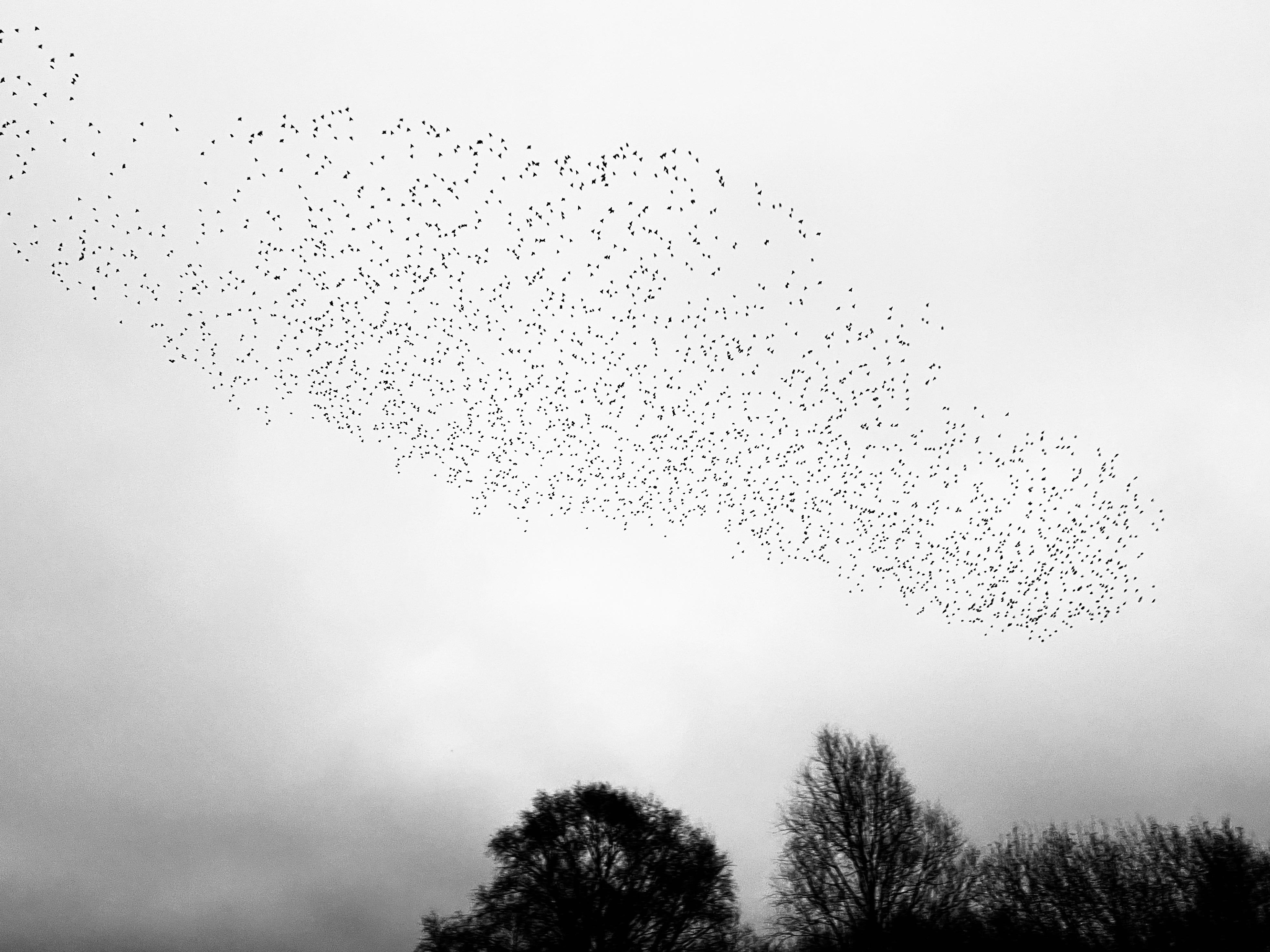
My January would not be complete without a trip to the Somerset Levels to see the starlings. Huge flocks gather over the Avalon Marshes in winter, roosting in the reedbeds overnight.
The UK’s breeding population of starlings has plummeted in the last 50 years (they are now a red-listed species of conservation concern), but between early November and late February/early March, numbers swell significantly with migrant birds from northern Europe coming here to escape a harsher winter. The BTO (British Trust for Ornithology) pointed me in the direction of this neat map of starling migration routes and a visualisation of the birds’ movements across the year.
The murmuration of thousands of birds, twisting and turning in unison, throwing patterns across the sky, is breathtaking. The reality – in my experience – is that you have to be quite lucky to witness the sort of show you might see on tv or online: beautiful evening light, a bird of prey on the hunt, myriad starlings swooping for their lives, flocks tightening into the most spectacular shapes.
But the mere sight and sound of some 500,000 birds (as I saw this year), appearing in small flocks at dusk, gathering into one vast, living cloud, wings whooshing right overhead, then suddenly, for no reason discernible to human onlookers, dropping down like a giant funnel of iron filings, into the reeds, is thrilling.
The main roost sites on the Avalon Marshes are in the nature reserves at Shapwick Heath (Natural England) and Ham Wall (RSPB), but I recommend checking the Starling Hotline before visiting to check where the birds last roosted. Also, bear in mind that the Avalon starling spectacle has become very popular in recent years and parking is limited; alternative UK starling roost sites might be more accessible and less crowded.
Snowdrops in the rain
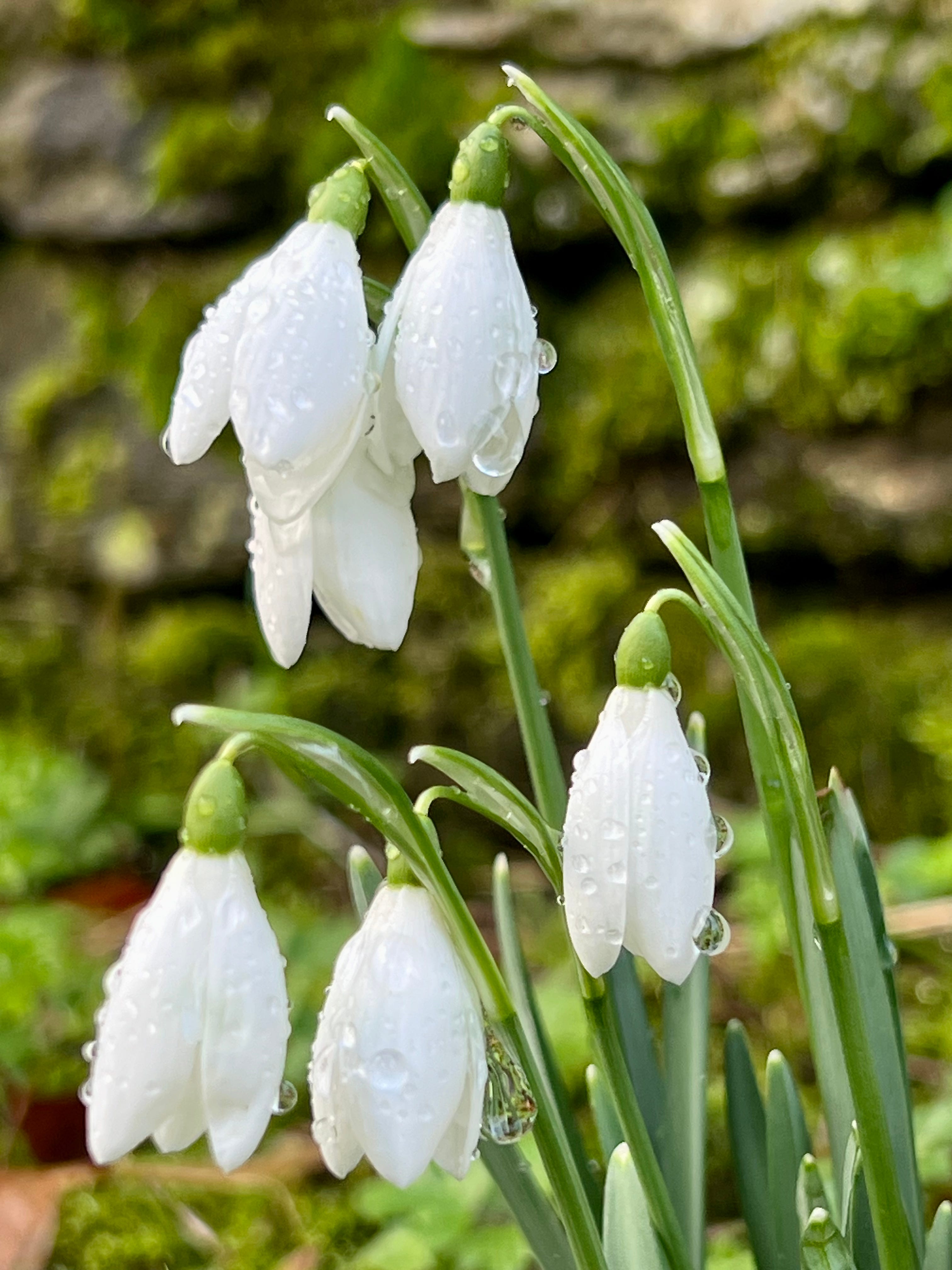
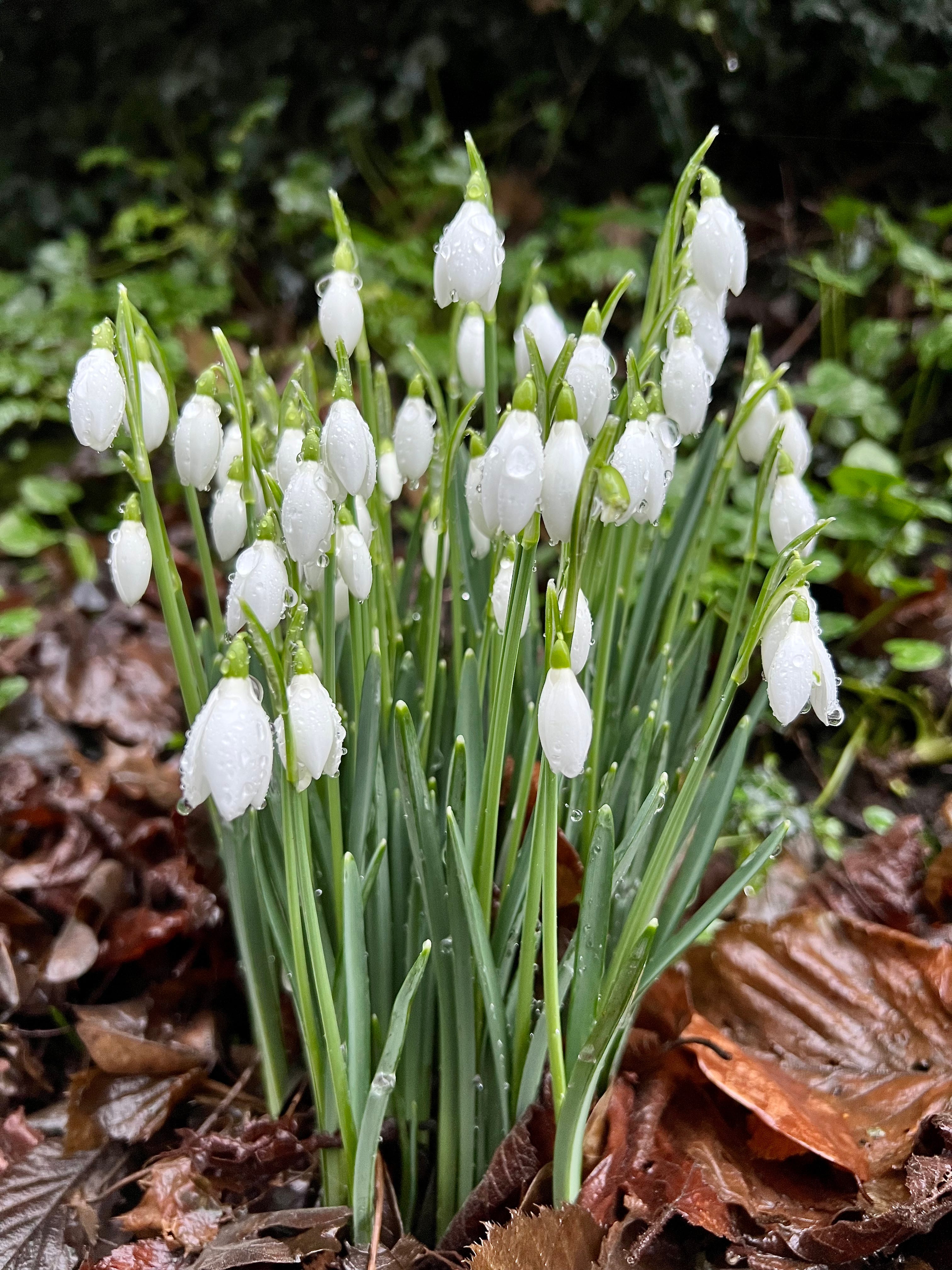
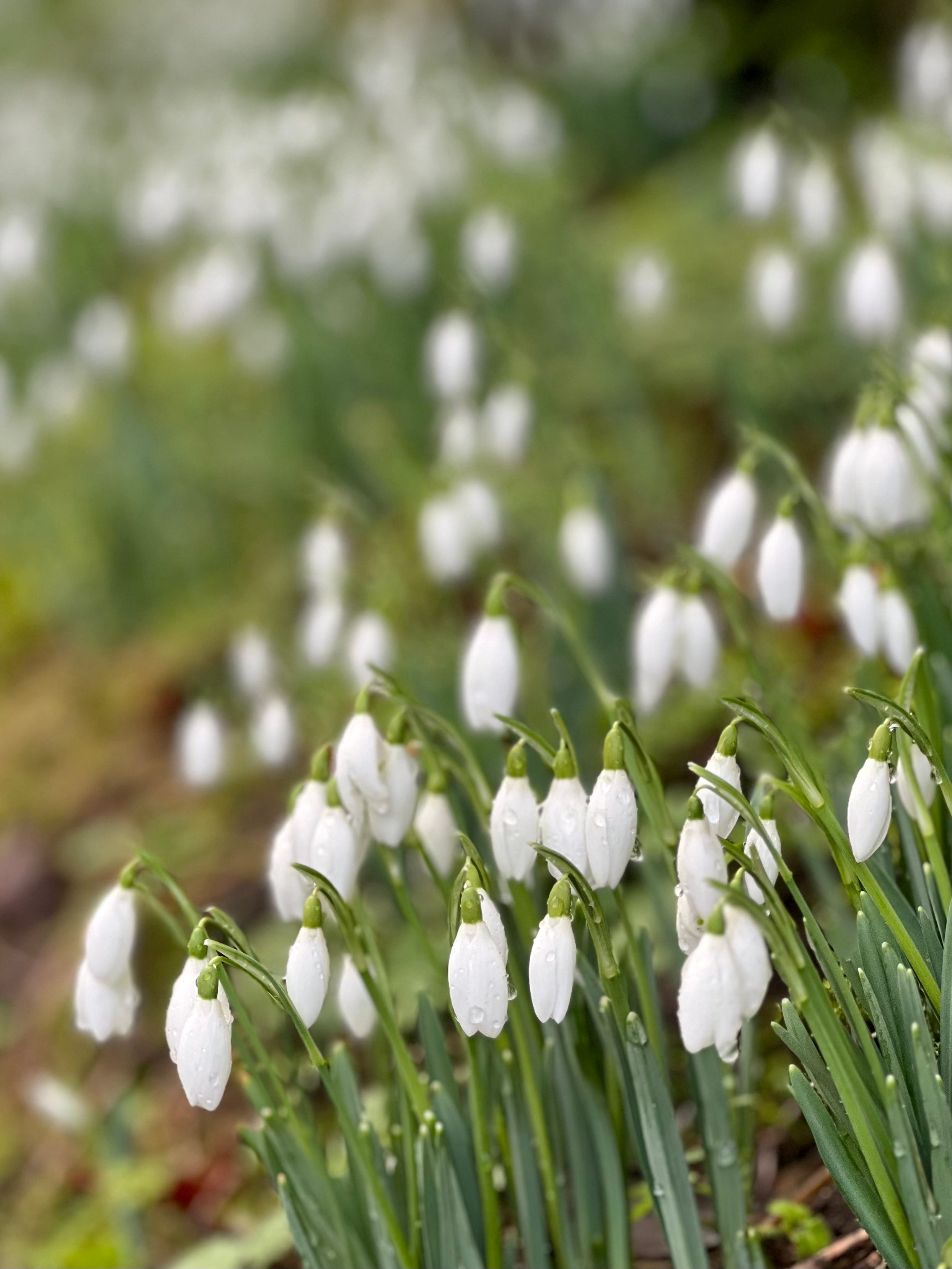
While snowdrop shoots were already poking through back in December (their leaf tips specially hardened for breaking through frozen soil), I first spotted their familiar white buds in early January. Snowdrops contain proteins with anti-freeze properties, which help prevent the formation of cell-damaging ice crystals, though this wasn’t necessary in the mild and wet conditions so far this year. By the end of the month, the buds had burst, each nodding at the end of its own leafless, green stalk.
I’m used to seeing the first snowdrop flowers on my Gloucestershire patch around this time, but records from Kew Gardens show that the average flowering date of the common snowdrop Galanthus nivalis moved from around the end of February in the 1950s to early January in the 1990s.
Common snowdrops occur widely across the UK and feel so much a part of our natural rhythm – a hopeful sign of spring to come – that they are often assumed to be native. But the species was likely introduced from mainland Europe in the late 1500s as an ornamental garden plant and gradually became naturalised in the wild. It has also become one of the world’s most popular cultivated bulbous plants. The most impressive snowdrop collection I have seen is at the Cambridge University Botanic Garden: 48 different species, varieties, cultivars and hybrids – definitely worth a visit if you are in the area.
Both snowdrops and daffodils belong to the Amaryllis family, and perhaps egged on by the weather, there are already a number of bright yellow trumpets fanfaring from gardens and roadside banks near me. What I’m most looking forward to over the coming weeks, however, is a woodland carpeted with native wild daffodils – my most recent foray revealed a forest of shoots.
I hope you enjoy noticing nature this month and creating some images with whatever camera you have (all the pictures in this post were made by me with an iPhone 13 Pro).
Thank you very much for reading.
Jane
It’s so interesting to follow early spring where you are. I’m in Canada and had no idea how lovely & early your springs are until my daughter went on a trip one year in March and I was delighted to see. We often have snow still lingering in April.